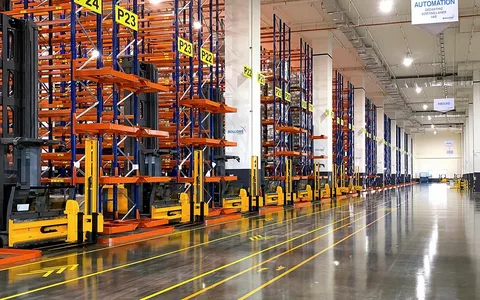
We co-invest capital and resources to establish new entities or acquire existing assets. This model ensures aligned interests, shared ownership, and long-term commitment to the venture’s success. Ideal for market entry, infrastructure projects, and long-term industrial operations.
Shared capital investment and ownership
Integrated management and governance
Profit and risk distribution based on equity
Long-term strategic alignment
Vertical Integration Ventures
We connect upstream suppliers with downstream buyers within a single value chain. Our Mine-to-Purchaser model is a prime example, linking mineral extraction, processing, and international sales under a unified, efficient partnership.
End-to-end supply chain control
Cost efficiency and quality assurance
Reduced dependency on intermediaries
Enhanced market responsiveness
International Market Access Partnerships
We partner with local and international firms to navigate regulatory, cultural, and logistical barriers. These ventures are designed to leverage SMNA’s on-the-ground intelligence and our partner’s technological or brand strength.
Local compliance and market intelligence
Shared distribution and sales networks
Brand collaboration and co-marketing
Risk-sharing in new territories
Project-Specific Consortiums
For large-scale projects in real estate, infrastructure, or industrial development, we form temporary consortiums that bring together specialists in finance, construction, legal, and operations. The partnership dissolves upon project completion.
Focused expertise for complex projects
Flexible and time-bound structures
Clear role definition and deliverables
Efficient resource pooling
Types of Joint Ventures
1. Equity Joint Venture (EJV)
Partners contribute capital and resources to create a new, legally independent entity. Ownership and profits are shared according to equity stakes.
2. Contractual Joint Venture
No new legal entity is formed. Partners collaborate under a contractual agreement for a specific project or period, sharing resources and profits as per contract terms.
3. Vertical Joint Venture
Partners from different stages of the supply chain collaborate to streamline production, reduce costs, and improve efficiency (e.g., a miner partnering with a processor).
4. Horizontal Joint Venture
Companies in the same industry or at the same supply chain stage collaborate to expand market share, reduce competition, or pool resources.
5. International Joint Venture
Partners from different countries collaborate to leverage local market knowledge, regulatory access, and global resources.
6. Project-Based (JV)
Formed for a single, specific project with a defined timeline. Once completed, the JV dissolves.
7. Consortium
Multiple partners come together for a large, complex project, often in sectors like construction, energy, or defense. Roles and responsibilities are clearly divided.
8. Hybrid Joint Venture
Combines elements of equity and contractual JVs, allowing flexibility in structure, investment, and operations.
Why Choose SMNA as Your JV Partner?
Proven Track Record: Decades of experience in cross-border and cross-industry partnerships.
Risk Mitigation Focus: Structured agreements that protect all parties.
Local & Global Networks: Access to markets, suppliers, and decision-makers.
End-to-End Support: From ideation to execution and scaling.
Ethical Governance: Transparent, compliant, and fair partnership practices.